-scaled.png)
Introduction: The Nutrition Challenge in Nut Orchards
As the global nut industry continues to flourish, walnut, pistachio, and almond crops have become lucrative choices for growers worldwide. Yet many farmers face the same perplexing question: Why does substantial fertilizer investment so often fail to deliver breakthroughs in yield and quality? Why do harvests vary dramatically from year to year despite consistent management practices?
The answer lies in the scientific system of crop nutrition management. Based on decades of field research from the University of California, Davis, combined with Adler Agriculture’s advanced agricultural technologies from Europe and China, this article systematically explains the core principles of nut crop nutrition management and provides professionally validated global solutions.
I. Three Scientific Insights Into Nut Crop Nutrition Requirements
1.1 Nutrition Requirements Are Not Static—Seasonal Curves Reveal Growth Patterns
Nut crops exhibit significantly different nutrient requirements throughout their growth stages. Research demonstrates that nutrient absorption patterns fall into three distinct categories:
Spring Peak Demand (N, P, Zn): Nitrogen, phosphorus, and zinc requirements peak during spring bud break, flowering, and leaf expansion, stabilize through summer, and decline in autumn. This explains why early spring fertilization is critical for annual yield.
Progressive Uptake (K, Mg, Cl, B, Ca): Potassium, magnesium, chlorine, boron, and calcium absorption increases continuously with fruit development, reaching maximum levels during nut filling and maturation. Mid-to-late season applications directly impact kernel plumpness.
Steady Demand (Cu): Copper requirements remain relatively consistent year-round, primarily supporting photosynthesis and enzyme system activation.
Adler Scientific Recommendation: Abandon “one-time” fertilization approaches. Developing staged nutrition programs based on seasonal element curves is the first step toward precision fertilization.
1.2 Stored Nutrients vs. Current Uptake—The Key to Solving “Alternate Bearing”
Nut crops possess a unique dual-source nutrient supply mechanism:
- Stored Nutrients: Nutrition accumulated in branches and roots during the previous autumn, primarily supporting spring bud break, flowering, and early leaf expansion
- Current Season Uptake: Nutrition absorbed through roots from soil during the growing season, primarily supporting fruit development and new shoot growth
Critical Finding: During early spring growth (April-May), stored nutrients contribute over 70% of requirements! If nutrient accumulation was insufficient the previous autumn, flowering and fruit set quality will suffer regardless of current fertilization—this is the fundamental cause of “alternate bearing” phenomena.
During cold springs or drought conditions, root absorption capacity is compromised, increasing crop dependence on stored nutrients. Under these circumstances, exogenous supplementation of rapidly absorbable nutrients becomes critical for maintaining stable production.
1.3 Yield Determines Demand Scale—High-Yield Orchards Require Higher Nutrient Inputs
Research data clearly demonstrates: nut yield levels directly determine total nutrient requirements. Producing 100kg of dried nuts removes predictable quantities of nitrogen, phosphorus, potassium, and other elements from the soil.
This means:
- Low-yield orchards (<150kg/acre): Standard fertilization suffices
- Medium-yield orchards (150-250kg/acre): Require 30-50% increased nutrient inputs
- High-yield orchards (>250kg/acre): Nutrient inputs must double, with special attention to element balance
II. Nutrient Deficiency Analysis in California Nut Growing Regions
Based on survey data from thousands of California orchards, the frequency of nutrient deficiencies in nut crops follows clear patterns:
Common Deficiencies (>30% occurrence)
- Nitrogen (N): The most widespread deficiency, directly impacting tree vigor and yield
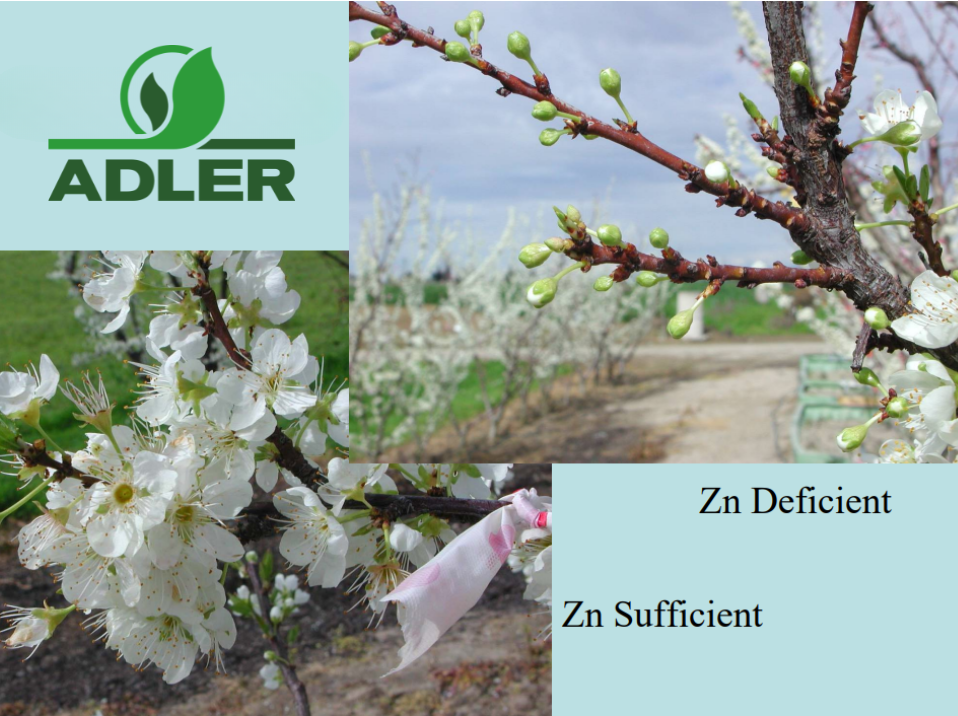
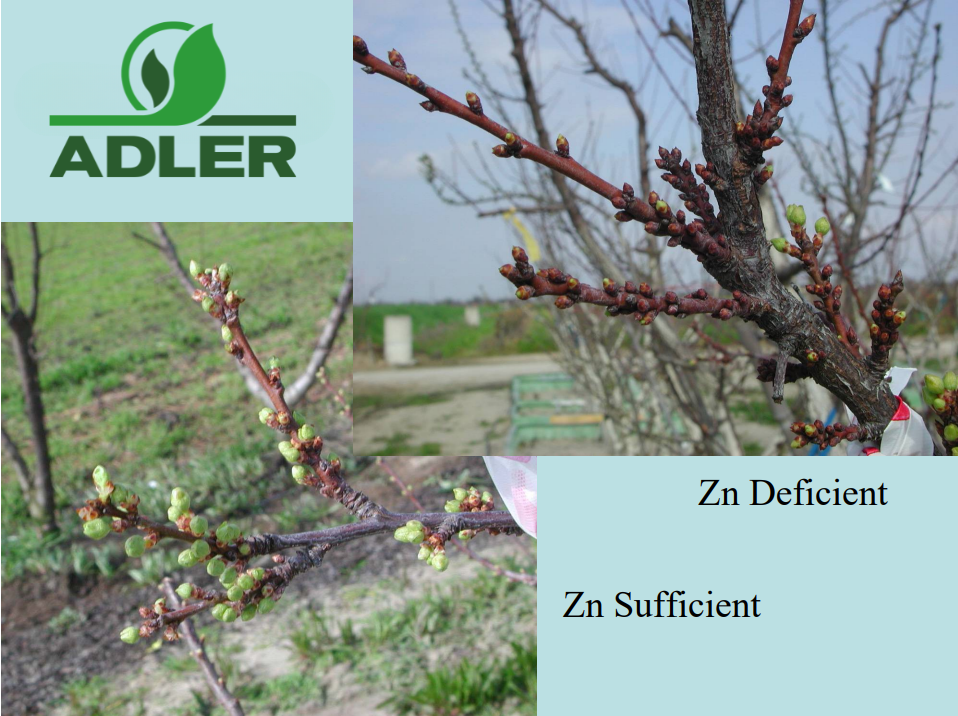
- Zinc (Zn): Prevalent in California’s calcareous soils, causing little leaf disease and reduced fruit set
- Iron (Fe): Common in alkaline soils, characterized by new leaf chlorosis
Occasional Deficiencies (10-30% occurrence)
- Potassium (K): Likely in sandy soils and high-yield orchards, affecting fruit size and quality
- Magnesium (Mg): Common in acidic soils and high-rainfall regions, causing older leaf chlorosis
- Manganese (Mn): Deficient in high-pH soils, impacting photosynthetic efficiency
Rare But Critical Elements
Phosphorus, boron, and copper deficiencies are relatively uncommon but cause severe reproductive disorders when they occur.
Important Alert: Calcium (Ca) nutrition has long been underestimated! While typical field deficiency symptoms are rare, calcium is critical for cell wall formation, post-harvest storability, and disease resistance—this “invisible nutrient” is essential for modern high-quality nut production.
III. Adler Agriculture Professional Solutions: Scientific Nutrition + Efficient Absorption
Based on deep understanding of nut nutrition 规律,Adler Agriculture, leveraging over 20 years of technological accumulation from our Spanish headquarters, provides field-validated systematic solutions for nut growers worldwide:
3.1 Foundation Nutrition Program: ADL110 Micro Nutri Vigor EDTA-Mix
Solves: Low soil micronutrient availability and absorption difficulties
Core Product Advantages:
- Full EDTA Chelation Technology: Zinc, iron, manganese, copper, and other micronutrients in EDTA-chelated form, maintaining availability across broad soil pH ranges (4-9), completely eliminating micronutrient fixation in calcareous soils
- Scientific Formulation: Precisely balanced according to nut crop requirements, preventing element antagonism
- 100% Water-Soluble, Residue-Free: Suitable for drip irrigation, sprinkler, and all fertilization systems
- EU Standards: Food-grade raw materials, meeting EU organic agriculture certification requirements
Application Timing: Bud break, post-bloom, fruit expansion—500-1000g per acre each application
3.2 Stress Emergency Program: ADL104 Moli Amino 80
Solves: Nutrient absorption 障碍 during cold springs, drought, and root damage
Core Product Advantages:
- Ultra-High Purity: ≥80% total amino acids, ≥75% free amino acids, over 75% L-α amino acids
- 100% Plant-Derived: Non-animal source, no disease risk, fully compliant with organic farming requirements
- Direct Absorption: No protein decomposition required—enters plant tissue within 2 hours after foliar application
- Dual Regulation: Supplies organic nitrogen while activating plant enzyme systems, enhancing stress resistance
Application Scenarios:
- Spray 3-5 days before anticipated cold springs to prevent frost damage
- Apply every 10-15 days during drought periods to maintain photosynthesis
- Rapid nutrition supplementation during root damage recovery
3.3 Quality Enhancement Program: Scientific Foliar Nutrition + High-Efficiency Adjuvant Combination
Solves: Low foliar fertilizer absorption efficiency and significant waste
ADL201 Organic Silicone
- Superior spreading: Reduces surface tension for uniform coverage on both leaf surfaces
- Rapid penetration: Opens leaf stomatal pathways, increasing nutrient absorption 3-5x
- Rainfast: No re-spraying required if rain occurs 30 minutes after application
ADL202 Moli Geniala Synergist
- Organic fluorine + plant extract complex formulation
- Physically eliminates pest and disease resistance, enhancing efficacy
- Drought resistance, anti-stress properties, reduces evaporation
- Safe, eco-friendly, residue-free
Golden Combination: Foliar nutrition + ADL201 Organic Silicone + ADL202 Moli Geniala Synergist = 300% absorption efficiency improvement
3.4 Intelligent Fertigation Program: ADL203 Defoamer
Solves: Excessive foaming during fertigation causing uneven application and air entrainment
Core Product Advantages:
- Rapid foam breaking, long-lasting foam inhibition
- No impact on fertilizer solubility or effectiveness
- Crop-safe, residue-free
- Compatible with all fertigation systems
IV. Annual Nutrition Management Guide for Nut Orchards
[Dormancy – Pre-Bud Break (December-February)]
Primary Goal: Replenish stored nutrients, prevent early spring zinc and iron deficiencies
- Soil application: ADL110 Micro Nutri Vigor 1kg/acre
- Dormant spray: ADL104 Moli Amino 80 500x + zinc fertilizer
[Bud Break – Flowering (March-April)]
Primary Goal: Ensure flowering quality, cold damage prevention
- Bud break stage: ADL104 Moli Amino 80 800x + ADL201 Organic Silicone foliar spray
- Cold spring warning: Spray ADL104 Moli Amino 80 600x 3 days in advance
- 80% petal fall: ADL110 Micro Nutri Vigor 800x + ADL202 Synergist foliar spray
[Fruit Expansion (May-July)]
Primary Goal: Promote fruit development, prevent nutrient deficiencies
- May: ADL110 Micro Nutri Vigor 1kg/acre via drip irrigation
- June: Foliar spray calcium fertilizer + ADL201 Organic Silicone
- July: Conduct leaf tissue analysis, adjust subsequent fertilization accordingly
[Kernel Filling – Harvest (August-October)]
Primary Goal: Improve kernel plumpness, promote flower bud differentiation
- August: ADL104 Moli Amino 80 800x + potassium fertilizer foliar spray
- Post-harvest: ADL110 Micro Nutri Vigor 1kg/acre + organic fertilizer to restore tree vigor and accumulate stored nutrients
V. Scientific Diagnosis: Evidence-Based Nutrition Management
Leaf Tissue Analysis—The “Gold Standard” for Precision Fertilization
Optimal Sampling Time: July (standard diagnostic window for nut crops)
Sampling Methodology:
- Collect leaves from both healthy and stressed trees separately
- Sample healthy, mature leaves from the mid-canopy periphery
- Composite samples from 20-30 trees per orchard for laboratory analysis
Diagnostic Value:
- Detect potential nutrient deficiencies 1-2 years before visual symptoms appear
- Verify actual effectiveness of fertilization programs
- Provide scientific basis for next year’s fertilization planning
Adler Value-Added Service: We provide professional leaf tissue testing and analysis services for core customers, with personalized fertilization programs developed by our agricultural experts.