-scaled.png)
Balanced plant nutrition is one of the foundations of healthy crop growth, stable yield formation, and efficient agricultural production. While nitrogen, phosphorus, and potassium are often the most discussed nutrients in crop management, plants also depend on secondary nutrients and trace elements to complete their growth cycle and maintain normal physiological activity.
For modern growers, the question is no longer simply whether a crop receives enough fertilizer. The more important question is whether the crop receives the right nutrients, in the right form, at the right growth stage, and under the right field conditions.
This is why multifunctional amino acid water-soluble fertilizers are gaining attention in crop nutrition programs. By combining bioavailable amino acids with selected secondary and micronutrients, these products can serve as a practical nutritional tool during key crop growth stages and stress recovery periods.
Why Essential Nutrients Matter in Plant Growth
Plants require a group of essential nutrients to grow, develop, and reproduce normally. These nutrients are generally classified into three categories:
- Primary nutrients, including carbon, hydrogen, oxygen, nitrogen, phosphorus, and potassium;
- Secondary nutrients, including calcium, magnesium, and sulfur;
- Micronutrients, including boron, chlorine, copper, iron, manganese, molybdenum, and zinc.
Although micronutrients are required in much smaller quantities than primary nutrients, their role should not be underestimated. Elements such as iron, zinc, manganese, boron, and copper are closely related to enzyme activity, chlorophyll formation, pigmentation, nitrogen metabolism, and other physiological processes.
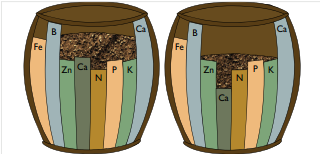
A shortage of one nutrient may become a limiting factor for crop growth, even when other nutrients are sufficiently supplied. At the same time, excessive nutrient application can also cause imbalance or crop stress. Effective plant nutrition therefore requires both sufficiency and balance.
The Role of Amino Acids in Crop Nutrition
Amino acids are closely linked to plant metabolism, protein formation, and stress response. In agricultural nutrition products, free amino acids are often used as bioavailable organic compounds that can support crop growth during periods of increased physiological demand.
Amino acid-based fertilizers are commonly applied during:
- Early vegetative growth;
- Transplanting and recovery periods;
- Flowering and fruit-setting stages;
- Rapid vegetative or reproductive growth;
- Low-temperature, cloudy, or rainy periods;
- Mild crop stress recovery after pesticide application or environmental pressure.
In these situations, crops may have reduced root activity or higher metabolic demand. Foliar application of amino acid-based water-soluble fertilizers can be used as a complementary nutritional strategy, especially when fast leaf-level nutrient support is needed.
Why Combine Amino Acids with Secondary and Micronutrients?
Amino acids alone can provide organic nutritional support, but the addition of secondary nutrients and micronutrients can make the formula more comprehensive.
For example:
- Magnesium is associated with chlorophyll and plant metabolism;
- Iron is involved in enzyme development and activity;
- Zinc supports enzyme activity and plant growth processes;
- Manganese contributes to enzyme activity and pigmentation;
- Boron is related to enzyme activity and reproductive development;
- Copper is involved in enzyme activity.
This combination makes amino acid and micronutrient formulations suitable for crops showing weak growth, pale leaves, slow recovery, or nutritional imbalance caused by environmental or soil-related factors.
LAFLOR: A Multifunctional Amino Acid Water-Soluble Fertilizer
LAFLOR is a liquid amino acid water-soluble fertilizer developed within the ADLER plant nutrition system. It is designed as a multifunctional nutritional product for use across important crop growth stages.
The formulation combines high levels of free amino acids with selected secondary and micronutrients, offering a balanced approach to foliar nutrition.
Technical Specification
| Item | Specification |
|---|---|
| Product Name | LAFLOR |
| Product Type | Amino Acid Water-Soluble Fertilizer |
| Formulation | Liquid |
| Free Amino Acids | 200 g/L |
| Magnesium (Mg) | 25 g/L |
| Zinc (Zn) | 10 g/L |
| Iron (Fe) | 5 g/L |
| Copper (Cu) | 2 g/L |
| Manganese (Mn) | 2 g/L |
| Boron (B) | 1 g/L |
| pH | 7–8 |
| Density | 1.25 |
| Appearance | Dark green liquid |
From a formulation perspective, LAFLOR is not designed as a single-element fertilizer. Instead, it provides a multifunctional nutritional combination based on free amino acids and multiple trace elements.
Key Application Value of LAFLOR
1. Supporting Leaf Greening and Nutritional Recovery
Leaf color is closely related to nutrient status, chlorophyll formation, and plant metabolism. When crops experience pale leaves, weak growth, or slow recovery, the cause may involve multiple factors such as low nutrient availability, weak root absorption, unfavorable weather, or micronutrient imbalance.
By combining amino acids with magnesium, zinc, iron, manganese, copper, and boron, LAFLOR provides a broad nutritional support system for crops during active growth and recovery periods.
2. Supporting Crops During Stress Conditions
Crops are often exposed to environmental and management stresses, including low temperature, insufficient sunlight, water fluctuation, and pesticide-related stress. These conditions may temporarily affect nutrient absorption and physiological activity.
LAFLOR can be used as part of a foliar nutrition program to support crop recovery after mild stress conditions. It should be understood as a nutritional support product, not as a replacement for pest control, disease management, or proper field diagnosis.
3. Suitable for Key Growth Stages
Different crops have different nutritional needs at different stages. LAFLOR is suitable for use during key periods such as vegetative growth, flowering preparation, fruit setting, fruit enlargement, and post-harvest recovery.
Its multifunctional composition makes it adaptable to a wide range of crop nutrition programs.
Applicable Crops
LAFLOR can be used on a broad range of crops, including:
- Vegetables;
- Melons;
- Fruit trees;
- Flowers;
- Tobacco;
- Medicinal crops;
- Field crops;
- Other grain and cash crops.
Actual application should be adjusted according to crop type, growth stage, local climate, field conditions, and agronomic recommendations.
Recommended Application
LAFLOR is recommended for foliar spray application.
Foliar spray: Dilute 800–1000 times.
Application interval: Every 7–10 days.
Suggested program: 2–3 consecutive applications according to crop condition.
For best results, avoid spraying during periods of high temperature, strong sunlight, or heavy rain. If rainfall occurs within four hours after application, reapplication at an adjusted rate may be considered according to field conditions.
Compatibility and Handling Notes
When using LAFLOR with other fertilizers or pesticides, a small-scale compatibility test is recommended before large-area application.
Avoid mixing the product directly with strongly acidic or strongly alkaline fertilizers and pesticides, as this may affect product performance. Store the product in its original container, keep it sealed, and place it in a cool, dry location away from food, feed, children, and livestock.
A Balanced Approach to Modern Plant Nutrition
Modern crop management requires more than simply supplying large amounts of fertilizer. It requires a balanced understanding of essential nutrients, nutrient availability, crop stress, and physiological demand.
Amino acid water-soluble fertilizers such as LAFLOR provide growers with a flexible foliar nutrition option during key growth stages and recovery periods. By combining free amino acids with magnesium, zinc, iron, copper, manganese, and boron, LAFLOR supports a more integrated approach to crop nutrition management.
As agriculture continues to move toward higher efficiency, sustainability, and precision, balanced plant nutrition will remain a key factor in improving crop performance and field resilience.
About ADLER
ADLER focuses on the research, development, production, and supply of premium plant nutrition products, organic fertilizers, bio-stimulants, and water-soluble fertilizer solutions. With an international agricultural background and a commitment to ecological agriculture, ADLER continues to provide crop nutrition technologies for growers and agricultural partners worldwide.
For more information, please visit:
https://adleragriculture.com/